
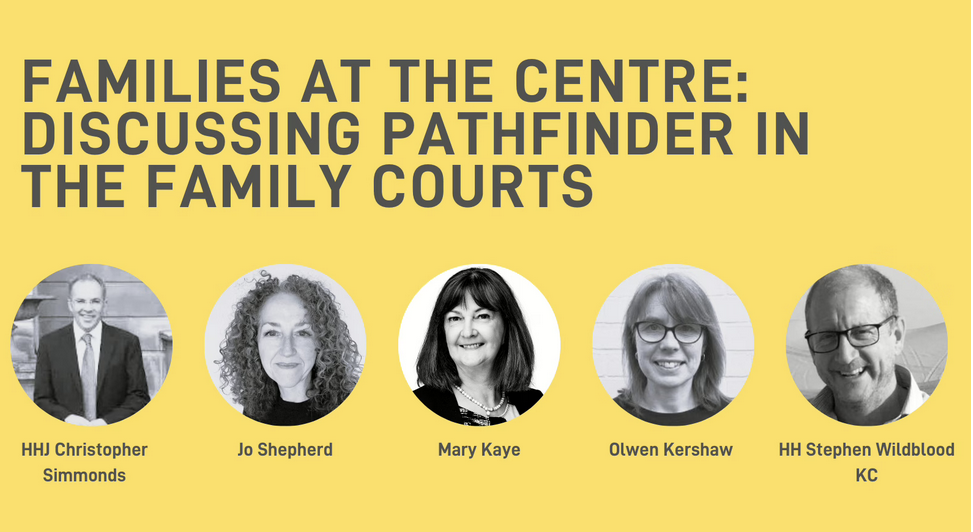
A webinar hosted by Support Through Court brought together judges, solicitors, and regional implementation leads to discuss the achievements of and the challenges for the Pathfinder programme.
Pathfinder is a pilot project designed to reform the process for private law children cases, following recommendations made in the 2020 Harm Panel Report. Launching first in Dorset and North Wales in February 2022, it has since expanded to South-East Wales in April 2024, Birmingham in May 2024, Mid and West Wales on 3 March, and West Yorkshire on 3 June 2025. The aim of scheme, according to Judge Christopher Simmonds, is to “make safer welfare decisions for children, quicker.”
Pathfinder achieves this through a “front-loading” of information. When an application arrives in court, it is screened within 12 hours for any local authority involvement. Within the first eight weeks most cases receive a comprehensive Child Impact Report prepared by Cafcass (The Children and Family Court Advisory and Support Service). This report is more detailed than a traditional safeguarding letter. Through the inclusion of photographs of and direct quotes by the child, focus is kept on the human being at the centre of the case. Around 70% of reports include the child’s voice, and for Simmonds this is has been transformational: “I’m making better decisions within better information … and that’s only good for the kids.”
Don’t just take his word for it: the statistics show a remarkable change. In North Wales, early pilots saw cases concluding 11 weeks faster than before, the number of open cases was cut by 50%, and hearings per case fell from 5 to 1.3-1.4. In Birmingham, pre-Pathfinder cases averaged 45.7 weeks, whereas Pathfinder-only cases average 15 weeks. Simmonds emphasises that this timeliness is ultimately good for all parties, as parents stop “treading water” and children are not left in limbo. Furthermore, the removal of routine review hearings has encouraged parents to leave “litigation mode” and accept a level of closure.
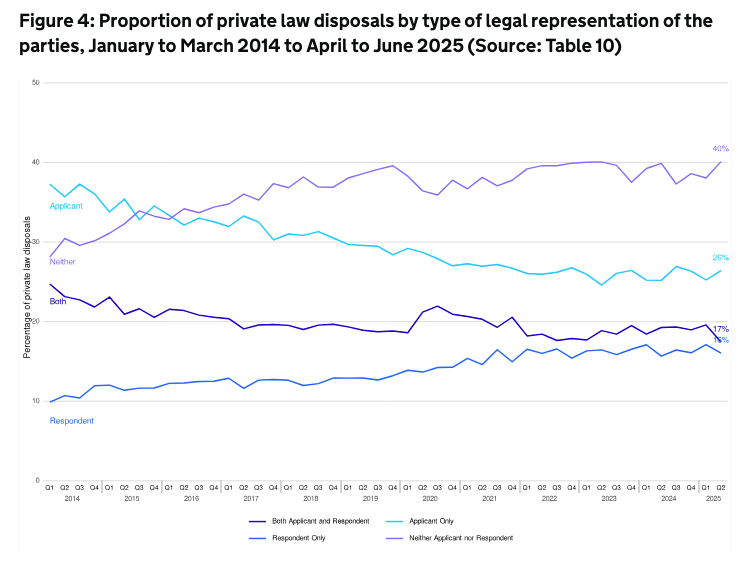
Litigation can be stressful for parents, particularly since 80% of Pathfinder cases involve at least one litigant in person. The scheme thus introduced Case Progression Officers, who contact unrepresented parents early, walk them through the court process, check vulnerabilities (e.g. special measures, disabilities), and track deadlines . The role also aids communication between the families, court, Cafcass, and local authorities. The panel stressed that there was room for improvement here, since many parents did not properly understand the purpose of CPOs.
This was not the only concern highlighted. Some parents feel that they have been funnelled through the system too quickly. Others have lacked been let down by interpreter shortages, and the scheme was somewhat let down by the inaccessibility of children and parents during the recent summer holidays. However, solicitor Mary Kaye emphasised that these were minor improvement points rather than indictments on the success of the model, concluding that Pathfinder is “very much the right way to go.”
Subject to funding allocation, the aim is to rollout Pathfinder much more widely across England and Wales; next year it will go live in the West Midlands and Hampshire. The incremental implementation so far adopted has allowed for continual review, and no doubt this careful approach will continue.

Judge Simmonds concluded by saying that “what we are doing is better than 4-5 years ago”, and I hope that in half a decade’s time the same statement will still apply. Because clearly the Pathfinder approach has resulted in better results for children and parents, and delivered on significantly reducing the court backlog for private children cases. Less Kafkaesque, more Cafcass.
You can watch the recording of this talk for the cost of £6, what it costs for one support session on the Support Through Court national helpline. They handle over 1000 calls a month.
Edward is currently studying the Graduate Diploma in Law and is a member of the Lawbore Journalist Team 2025/26. He studied history at undergraduate level, during which he became particularly interested in legal history, which in turn led him to pursue a career in law. Family and land law are two of his particular interests, and he hopes to practice in these areas in the future.